The following is an email which was sent to my private list, you can join HERE.
In life, you will inevitably face the dreaded plateau.
The period of time when, no matter what you do, nothing seems to work.
Business initiatives stop bringing in cash.
Creative projects are total duds.
Your physique isn’t improving, the fat is NOT melting off, and the gains aren’t coming.
Many of these problems stem from what has been called ‘Excess Importance’.
You care too much about the outcome; this makes you myopic.
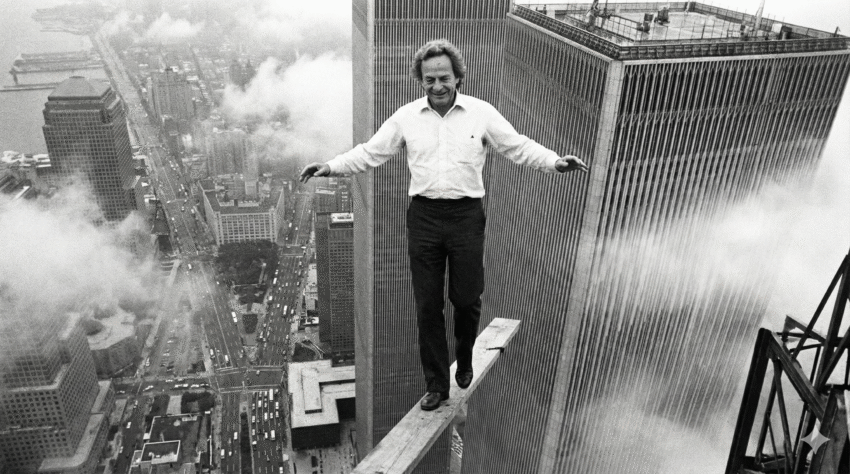
Consider this: walking on a plank resting on the ground is a piece of cake.
But put the same plank between two buildings and suddenly, the situation changes.
The difference comes from the importance stemming from perceived risk.
Luckily for you, there is an interesting cure for this affliction, a cure recommended by some of the greatest geniuses of our time:
Having fun.
The Burnout of Richard Feynman
Richard Feynman is one of the greatest geniuses to ever do it in the field of Physics & Mathematics.
He is a Nobel Prize winner and was part of the Manhattan Project alongside Oppenheimer, Hans Bethe & Niels Bohr during World War 2.
Despite his colossal mind, he too hit the Dreaded Plateau,
“when it came time to do some research, I couldn’t get to work. I was a little tired; I was not interested; I couldn’t do research! This went on for what I felt was a few years.”
Feynman tried everything to motivate himself, but nothing worked.
After some time, he had a profound realisation;
He stopped progressing because Physics had become boring.
When he was younger, he did Physics for fun.
He worked on problems he found interesting and chased his curiosities.
At some point, all the bureaucracy ruined the fun.
The weight of responsibility of being a “Dignified Professor” killed his ability to connect with the creative intelligence behind all great ideas.
After this realisation, Feynman vowed to focus on having fun and reducing the importance of physics.
“Within a week I was in the cafeteria and some guy, fooling around, throws a plate in the air. As the plate went up in the air I saw it wobble…I had nothing to do, so I start to figure out the motion of the rotating plate…It was effortless. It was easy to play with these things. It was like uncorking a bottle: Everything flowed out effortlessly. I almost tried to resist it! There was no importance to what I was doing, but ultimately there was. The diagrams and the whole business that I got the Nobel Prize for came from that piddling around with the wobbling plate.”
Feynman followed a Bridge of Incidents that led to him receiving the Nobel Prize.
The Genius Albert Einstein gave eerily similar advice to his son in a personal letter.
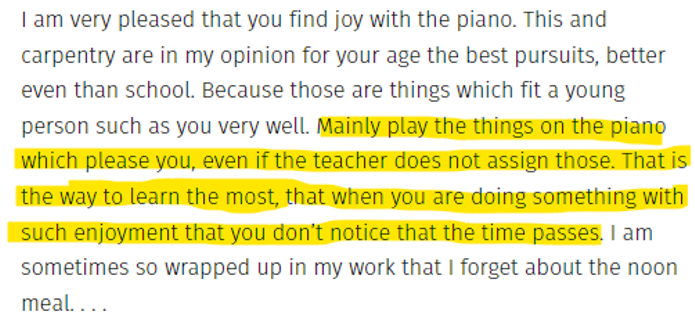
If this shit works for geniuses, it can work for us.
The Art of Playing The Key To Destroying Excess Importance
Have you ever noticed that many musicians make their best albums during the early years of their careers?
Often it happens when they are broke, having nothing to lose and are making music for the love of it.
When they explode on the scene and reach worldwide fame, the music that they loved becomes a secondary consideration.
They now have to deal with: record labels, keeping up with trends, managers, fans, tours, brand deals and a plethora of other things outside the music.
Fun is replaced by responsibility.
This results in a product without soul.
Many of these artists get a second wind later in their careers once the pressure has been removed.
The pattern is also seen in the sporting world.
An example that comes to mind is a young Conor McGregor.
During his early career, he would play ‘touch-butt’ in the park with a movement coach called Ido Portal.
His fight style was more fluid; he regularly entered a flow state during his matches inside the Octagon.
This was all ruined upon making 100 million dollars fighting Floyd Mayweather in a boxing match.
His new style became stiff, predictable and stale.
He forgot how to have fun and started taking himself too seriously.
This led to him losing his momentum and, in my opinion, cutting down his legacy.
Don’t fall for this trap.
Always maintain an element of play and curiosity in your work.
This playful approach is what can lead to your next Quantum Leap.
Talk soon,
Isaac